What are some of the effective practices schools are implementing?
Site Reflections
576 CCSPP schools from Cohorts 1-3, shared their best practices regarding community schools implementation, particularly the Capacity-Building Strategies, the engagement of educational partners and the provision of whole-child and family supports. The frequency visualization, below, highlights the most common areas of work where grantees are seeing promising progress.
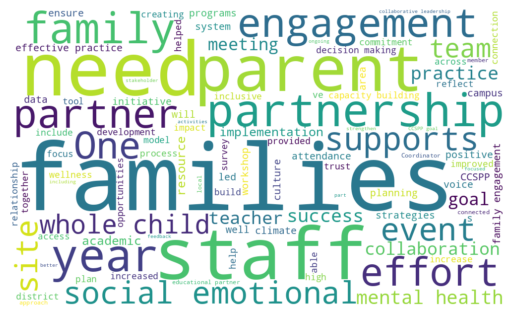
Staff Collaboration and Development: Schools described structured collaboration among educators, administrators, families, students, and partners to co-lead implementation efforts. They are listening to the needs of educators and creating cross-divisional teams to support implementation.
In practice:
Establishing site teams
Refining shared leadership structures
Professional learning
Meeting regularly to coordinate services and review progress
Examples from grantees:
Our focus on Collaborative Leadership has been instrumental. By increasing staff development opportunities, refining goal-setting practices, and strengthening the role of our School Site Council, we’ve created a more cohesive, shared leadership culture.
One of our most impactful strategies has been the implementation of professional development tailored to the needs of our educators and staff. Training focused on inclusive teaching, trauma-informed care, and data-driven instruction have empowered staff to better support our diverse learners, including students with disabilities, foster youth, and students.
Community Partnerships: Schools described the formal collaboration with external organizations to expand resources and whole-child supports available to students and families. In addition, partnerships made wraparound services possible, such as establishing wellness hubs, providing access to clothing and food resources, and connecting families to community-based services.
In practice:
Establishing partnership agreements
Coordinating services with community agencies
Integrating partners into school planning structures
Providing services through supports hubs
Examples from grantees:
We have also formalized agreements with educational partners and used team mapping to streamline collaboration and maximize impact.
A key success has been the establishment of our Wellness Hub and the presence of a dedicated Wellness Specialist on site. These resources have provided students and families with increased access to mental health services, basic needs support, and social-emotional development opportunities.
Student Voice / Leadership: Schools described structured opportunities for students to lead initiatives, provide feedback, and participate in decision-making processes.
In practice:
Peer mentorship programs
Student-led presentations
Incorporating student reflections into program adjustments
Examples from grantees:
We also experienced success with our student-led WEB (Where Everybody Belongs) program, which fosters leadership and peer mentorship among students.
A notable success has been the development of student leadership opportunities, including peer mentoring in kindergarten classrooms and student-led planning of school events. These roles empower students to contribute meaningfully to the school community, fostering a greater sense of responsibility and belonging. Weíve observed increased student satisfaction and participation in school activities as a result.
Family Engagement: Schools described the use of intentional strategies to increase family participation, communication, and leadership within the school community.
In practice:
Multilingual outreach
Workshops
Culturally responsive events
Designated staff roles to support family connection and empowerment
Examples from grantees:
Our Family Resource Liaison also emerged as a critical connector… she helped families—especially newcomers and English learners—feel seen, supported, and empowered to participate more fully in their child’s education.
To further support the whole family, the school has partnered with external organizations to offer English as a Second Language (ESL) and GED preparation classes for parents. These offerings empower parents with tools to support their children academically and navigate systems more confidently. Additionally, HMSA has partnered with the Los Angeles County Department of Mental Health (LACDMH) to host monthly mental health workshops for parents, fostering a culture of wellness and reducing stigma around seeking help.
Attendance Focus: Schools described the use of targeted strategies designed to improve student attendance through monitoring, incentives, and coordinated interventions.
In practice:
Forming attendance teams
Implementing recognition programs
Providing timely supports to address barriers to regular school participation
Examples from grantees:
The school has achieved notable success in reducing chronic absenteeism by establishing a dedicated Chronic Absenteeism Taskforce. This team worked collaboratively with the middle school to implement a comprehensive, family-centered approach to addressing the issue. The taskforce focused on building strong partnerships with families, identifying the root causes of absenteeism, and developing tailored strategies to support each student’s unique needs. By prioritizing accessibility, open communication, and proactive problem-solving, the taskforce was able to remove barriers to attendance and foster a stronger connection between families and the school community, ultimately leading to improved student attendance and engagement.
Mental Health / Social-Emotional Learning: Schools described structured supports designed to strengthen students’ emotional regulation, peer relationships, and overall well-being.
In practice:
Mentorship groups
Dedicated wellness centers
Integrated mental health services delivered on campus
Examples from grantees:
After students voiced a need for increased mental health support, we collaborated with our on-campus mental health partner to increase the number of therapists serving our school from one to three. This expansion has significantly improved access to individual counseling and crisis intervention services.
Data-Driven Improvement: Schools described the use of formal data systems and structured analysis processes to guide planning and continuous improvement.
In practice:
Reviewing climate and attendance data
Conducting needs assessments
Using surveys and referral trends to refine interventions
Examples from grantees:
The school’s use of continuous data monitoring through the Needs and Assets Assessment, Panorama surveys, and COST referrals has allowed for more responsive decision-making.
Staff, families, and students regularly reflect on data to adjust programming and prioritize actions aligned with our implementation goals.